What happened in 2026
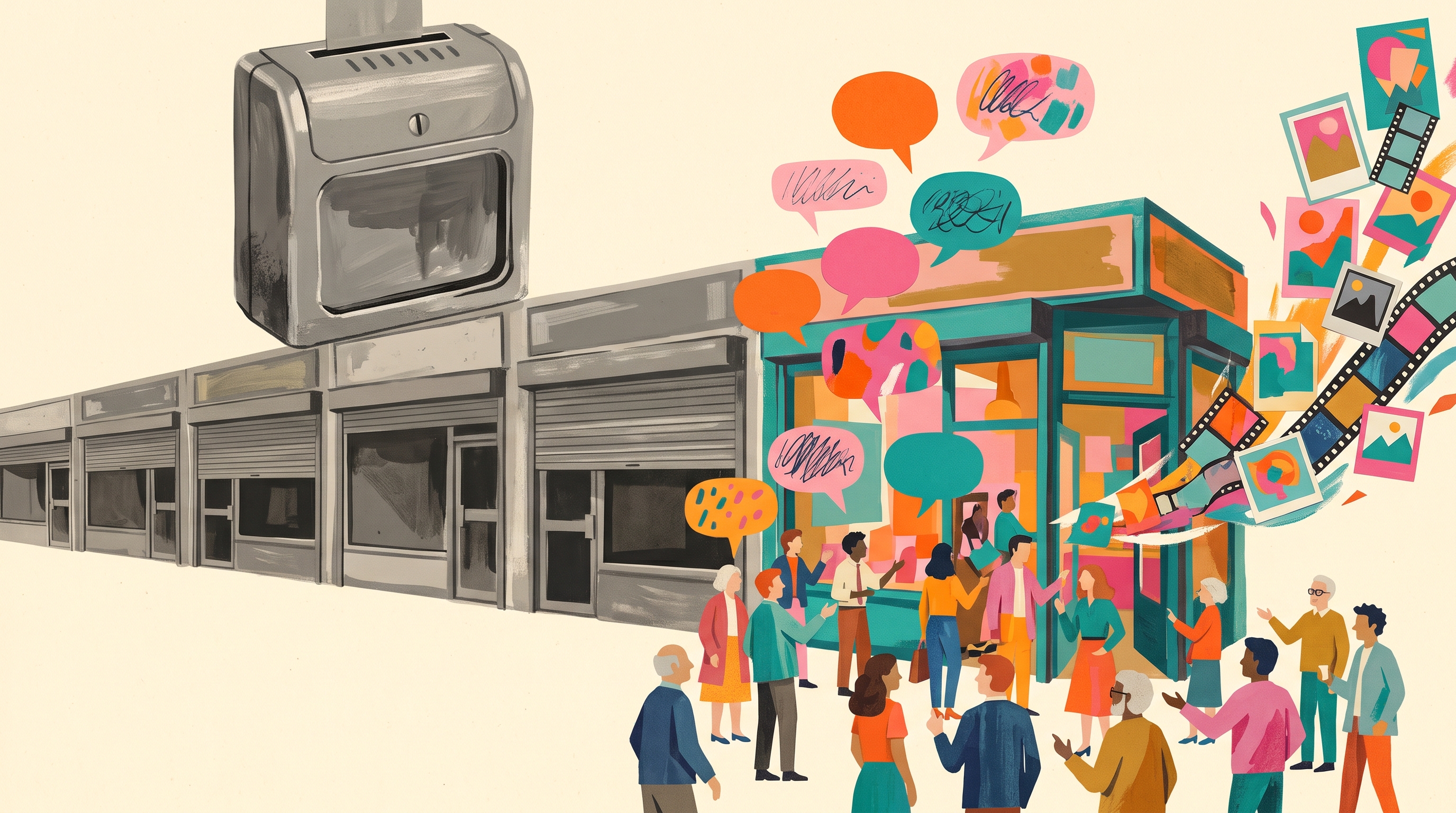
TLGG was shut down as a standalone agency brand in November 2026. It was not bankrupt. Its parent company Omnicom is cleaning up its German portfolio and betting on global network brands.
Interone and Track went in the same move. Both brands, with offices in Berlin among other places, were dropped as part of Omnicom's digital restructuring.
Heimat (HeimatTBWA) was one of Berlin's defining creative agencies. It lost its long-standing lead client Hornbach in May 2026 and was then dissolved as a standalone brand in Omnicom's restructuring.
kesselkramer has won awards around the world and also worked for German clients such as Arte Deutschland and the Deutsches Museum. The agency was declared insolvent at the end of May 2026 after losing several major projects.
Getty Images is one of the biggest international cases of the year. The world's leading image agency filed for Chapter 11 creditor protection in the US in October 2026. AI-generated images had put heavy pressure on the business, and the planned merger with Shutterstock had failed.
Two movements, one pattern
Two developments are running at the same time behind these cases.
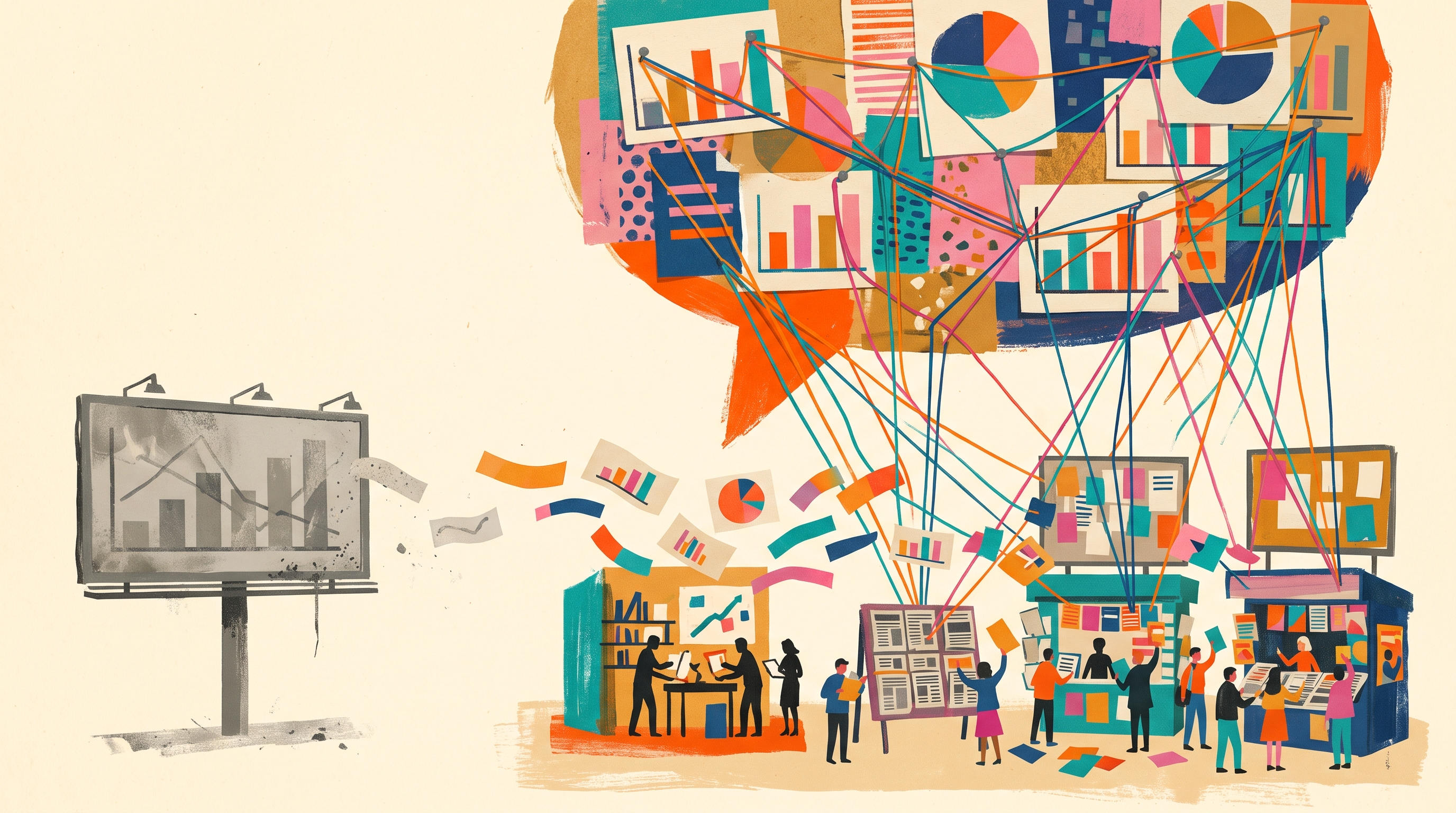
First, consolidation from the top. The holding groups are bundling their business. Strong local brands with their own culture were a competitive edge for a long time. Today they are a cost block when the same service can be sold more efficiently under a global network brand.
Second, automation from below. At the same time, more and more platforms are doing marketing work with agentic AI: copy, image generation, video generation, campaign pre-testing, ongoing optimisation of budgets and creatives. What used to keep a team of strategists, designers, producers and media planners busy for weeks, agents now deliver in hours.
Getty shows what happens when production gets cheap. Stock photos were a scarce good for decades. Today they cost next to nothing. Agencies whose value lies mainly in production face the same problem. It is just arriving a little later.
The new ecosystem: agentic marketing
A new ecosystem is emerging from many specialised agents. Each agent takes on one job, and the agents work with each other:
Strategy agents derive positioning and messages.
Content agents write copy for every channel.
Image and video agents produce creatives in every variant and format.
Pre-testing agents rate campaigns before media budget is spent.
Optimisation agents steer budgets and variants while campaigns run.
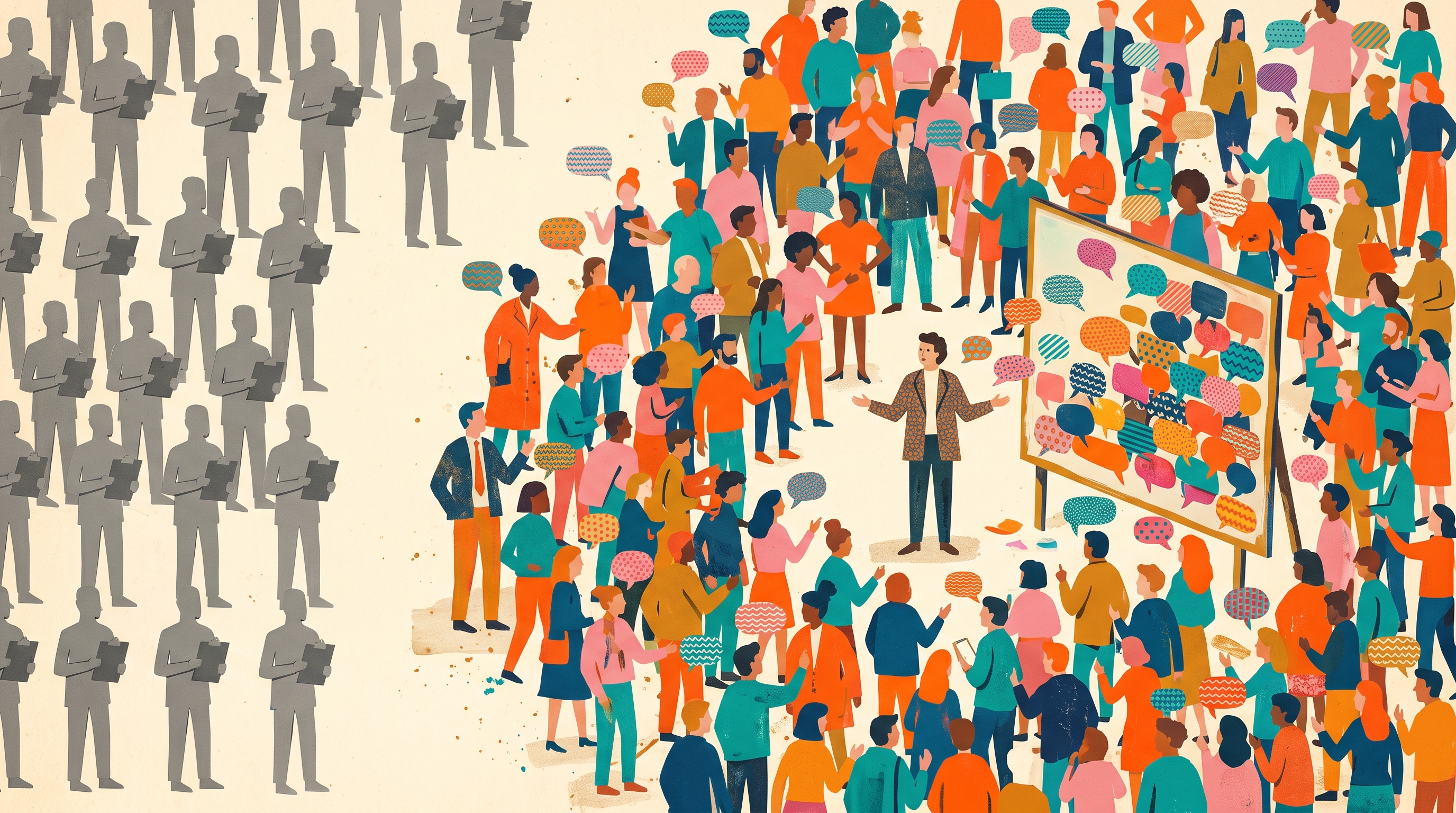
Something crucial is missing from this system: the consumer. Agents can produce unlimited content. Whether that content reaches its audience, they do not know. Without real voices from the market, they optimise for plausibility instead of resonance. That is exactly how LLM slop is made: copy that sounds right and moves no one.
Where VOLTO AI comes in
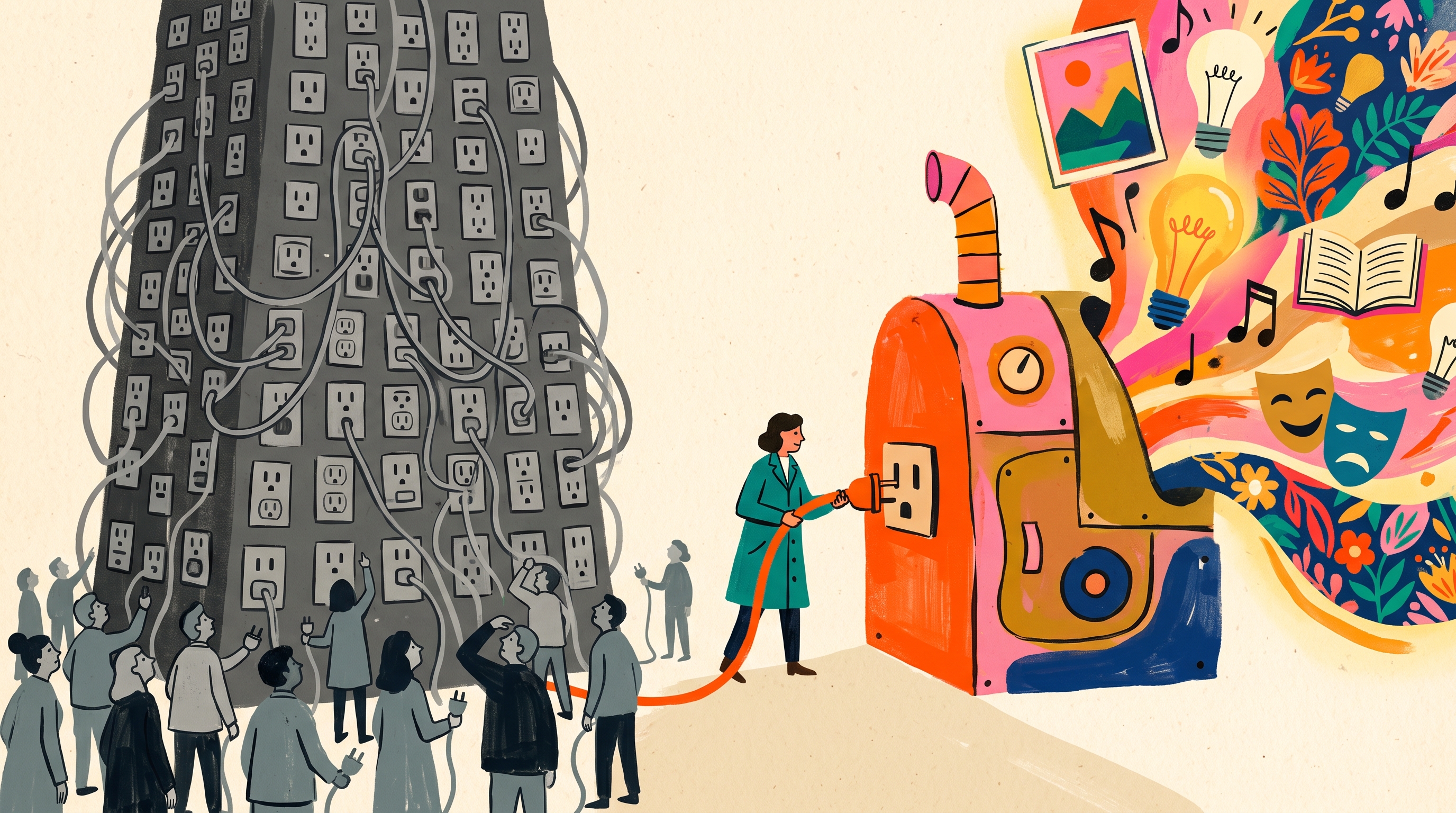
VOLTO AI closes this gap. We deliver market research in near real time. Real consumers answer questions by voice, and agents analyse the answers. The result is consumer resonance: a continuous signal of what people really think, feel and buy.
The difference from classic market research is not only speed. VOLTO AI works directly with other agents. A content agent can ask VOLTO which message lands with a segment. A strategy agent can test a positioning against real consumer statements before it goes into production. That keeps strategy aligned with the consumer, and content hits the nerve of the audience and the moment.
It is also the best training against LLM slop: a model that works with real statements from real people stops writing like an average of the internet.
What “AI-native” really means
Few terms are used as loosely right now. Many agencies call themselves an “AI-native agency” because they use ChatGPT day to day or have automated a few workflows. That is sensible, but it is not AI-native. It is a classic agency with better tools.
AI-native means the company is built from day one so that agents do the work. AI is not a tool that supports people in their jobs. It is the architecture the whole business runs on.
Three questions show the difference:
Who does the work? In an AI-assisted agency, people work and AI helps them. In an AI-native company, a multi-agent system does the work. People build, steer and improve that system.
How does the business scale? A classic agency grows with its headcount. More clients means more people. An AI-native company grows with compute.
What is being sold? The agency trades money for working time. Even flat fees are calculated in hours internally. An AI-native company delivers output, on demand. No hourly rate, no briefing ping-pong, no capacity planning.
VOLTO AI is an AI-native startup in this sense. A complex multi-agent system does the work for us: from study design to fieldwork to analysis and the report. This is not an automated version of a market research institute. It is a different architecture and a different business model.
Taken to its end, this means an AI-native agency needs no employees to deliver its work. Look at the ecosystem forming right now and you see how close we already are. Strategy, content, image, video, testing, optimisation and, with VOLTO, the consumer perspective are all available as agents that can talk to each other.
How agencies can survive
The end of the classic agency model is not the end of agencies. But those who want to last need to set themselves up differently:
1. Move away from the hourly rate. As long as revenue depends on working time, every efficiency gain from AI costs revenue. Agencies need pricing that pays for results: per output, per campaign, per impact.
2. From producer to orchestrator. Production is becoming a commodity. Value is created where someone picks, connects and steers the right agents and takes responsibility for the result.
3. Own systems instead of borrowed tools. Anyone using the same tools as everyone else is interchangeable. Those who build their own agent workflows, their own data and their own knowledge about customers have something that cannot be copied.
4. Bring the consumer into the loop. The more content agents produce, the more valuable it is to know which of it works. Agencies that feed real consumer voices into their processes continuously, instead of commissioning one study a year, deliver work that stands out.
5. Be honest about the label. Writing “AI-native” on the website does not change a business model. Clients notice by the invoice at the latest whether they are paying for output or for hours.
Conclusion
TLGG, Heimat, kesselkramer and Getty failed in different ways. But they all show the same thing: a business that sells working time or scarce production loses value as soon as agents do that work. Marketing in the coming years will be made by systems that deliver on demand. What matters is whether those systems know what really moves people.